

Do You Know Who Would Click a Phishing Email?
Modern phishing emails are designed to look like normal business communications. A supplier invoice. A payment request. A shared document. An email from someone you trust.
Attackers only need one person to click.
Trojan's Security Awareness Training and Phishing Simulations help you identify vulnerable users, test employees against realistic threats and measure whether your organisation's cyber awareness is improving.
Could Your Team Spot the Warning Signs?
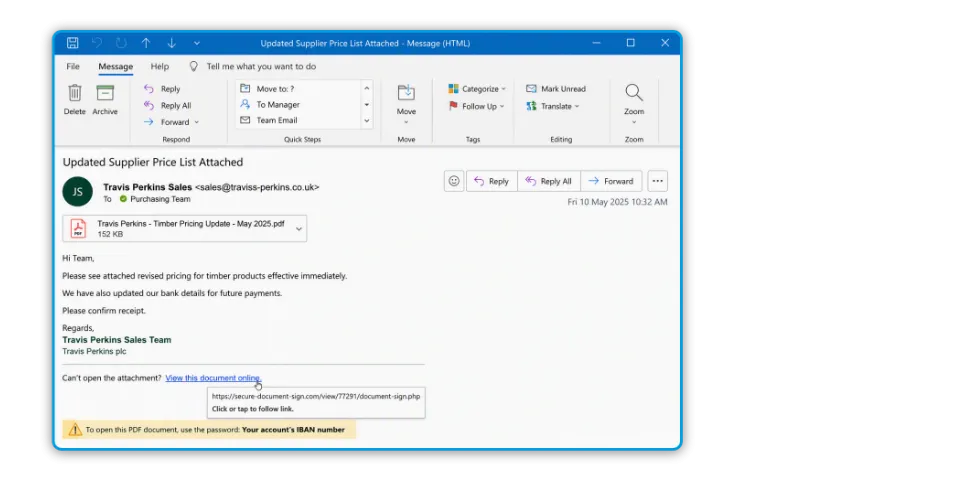
At first glance, this supplier price list email looks completely normal. It is exactly the kind of email employees at a builders merchants store deal with every day.
That's because people aren't fooled by phishing emails from being careless. They click because the email looks genuine. Take a closer look, and you'll notice:
- The supplier's email address has a spelling mistake
- The link points to an unknown website
- The PDF password request uses the company's IBAN

One Click Is All It Takes
A successful phishing email can quickly become a wider business incident.
The question is not whether employees have completed security training. It is whether they will recognise the threat when it arrives in their inbox. If they click that link, it could mean:
- A stolen password
- A comprimised account
- A fraudulent payment
- Exposed business or customer data
- Business disruption
- Reputational damage or fines
Phishing is Becoming More Personal
A criminal does not necessarily need inside access to learn about your organisation.
Your website, public records and employee social profiles can contain information about your people, customers, suppliers and operations.
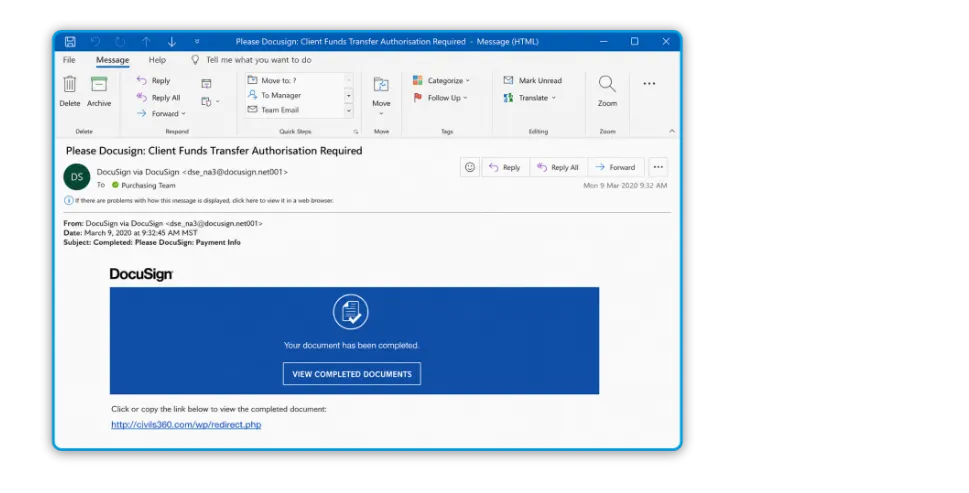
Combined with modern AI tools, that information can help make phishing emails feel relevant and familiar - like this email targeted at a solicitors practise, crafted to trick them into clicking while in the middle of a client handover.

Training Alone Doesn’t Make Your Business More Secure
But changed behaviour does.
Trojan's Security Awareness Training and Phishing Simulations turn assumptions into measurable results. Instead of simply knowing employees completed training, you can see how they respond to realistic threats. You'll be able to answer:
- Who clicked the phishing simulation?
- Who reported the suspicious email?
- Which users need additional support?
- Is awareness improving over time?

Turn Human Risk into Measurable Improvements
With Trojan's 3 Step Training Process, Testing, training and reporting work together to show where risk exists and whether awareness is improving.
Evaluate: We will evaluate how much of a risk your current employees are posing in terms of cybersecurity. This will happen by sending phishing simulations that assess the human vulnerability to attack in your business.
Educate: After evaluation, we will provide training to all employees. This will be tailored towards the results from the first evaluation and will educate staff on vulnerability when dealing with cyber threats, as well as how to spot them.
Calculate: At the end, we will calculate the risk posed against future threats and identify action that may need to be taken. There will also be the chance to reinforce training at a future date and measure progress.